Flipping too early gives you a pale, gummy pancake that tears. Flipping too late gives you a dark, dry one. Fortunately, a pancake tells you when it’s ready, if you know what to look for.
Sign 1: bubbles that pop and stay open
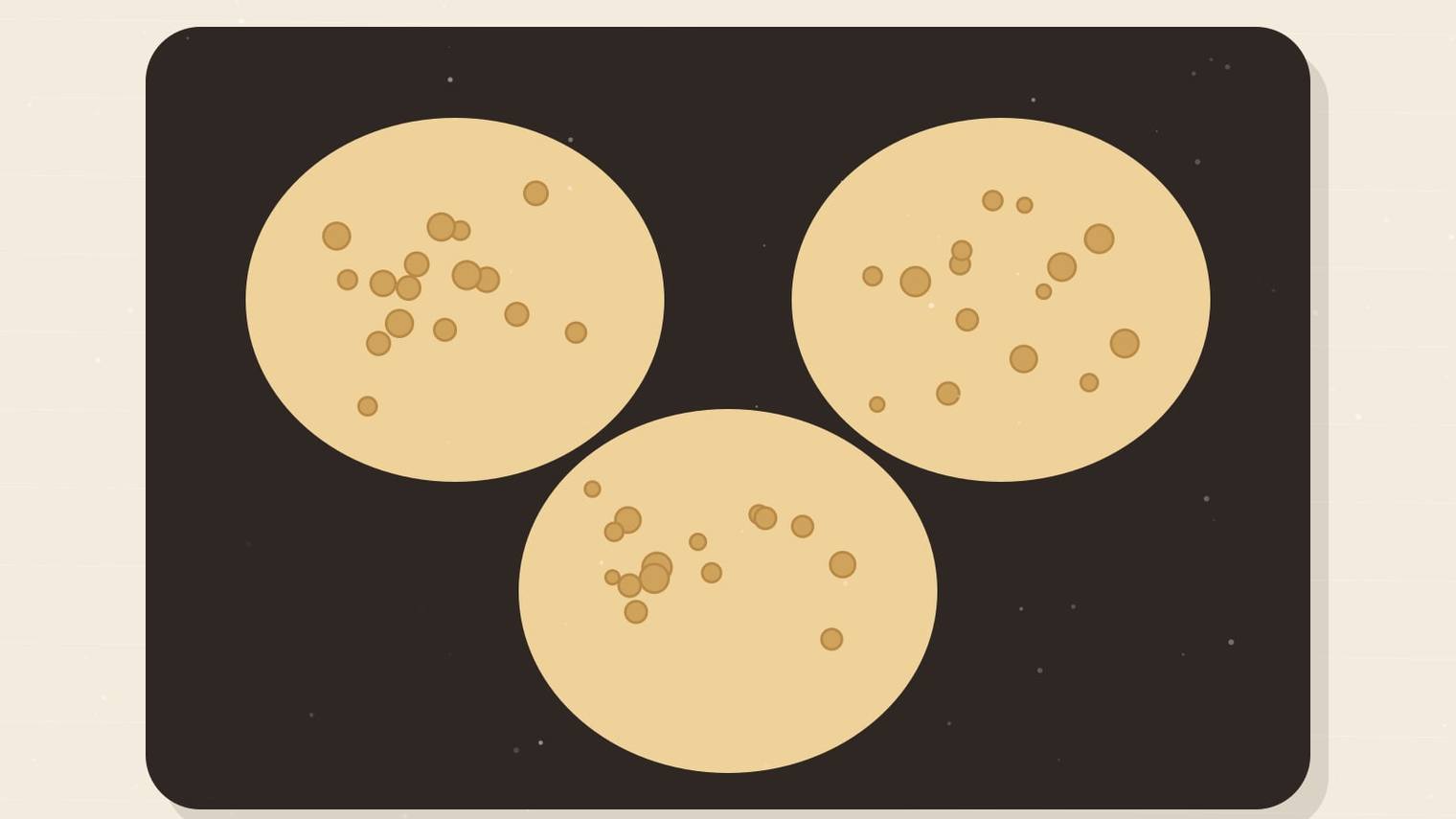
As the pancake heats, gas from the leaveners rises to the surface as bubbles. At first they pop and the batter flows back in to fill the hole. When the top layer has thickened enough, popped bubbles stay open as little craters. That means the pancake has set enough to hold its shape when flipped.
Sign 2: matte, dry-looking edges
Look at the rim. Raw batter is glossy. When the outer half-inch looks dull and set, the pancake has cooked from the outside in.
Sign 3: a golden underside
Lift an edge with a thin spatula. You want an even, deep golden brown. Pale means wait. Patchy dark spots mean too much butter or uneven heat.
Getting the heat right
If those three signs don’t arrive together, adjust the heat:
- Browns before bubbles open: too hot. Turn it down a notch.
- Bubbles open but still pale after 3 minutes: too cool. Turn it up slightly.
Medium heat, about 350 to 375°F (175 to 190°C) on an electric griddle, is right for most batters. Cook a test pancake first. It’s the cook’s snack.
Don’t press!
Pressing a pancake with your spatula after flipping squeezes out the air that makes it fluffy. Let it be.
Put it all into practice with our fluffy buttermilk pancakes.